
On Writing With AI: Editing with the MIDI Method
A Checklist for AI-Assisted Writing

Editing with the MIDI Method: A Checklist for AI-Assisted Writing
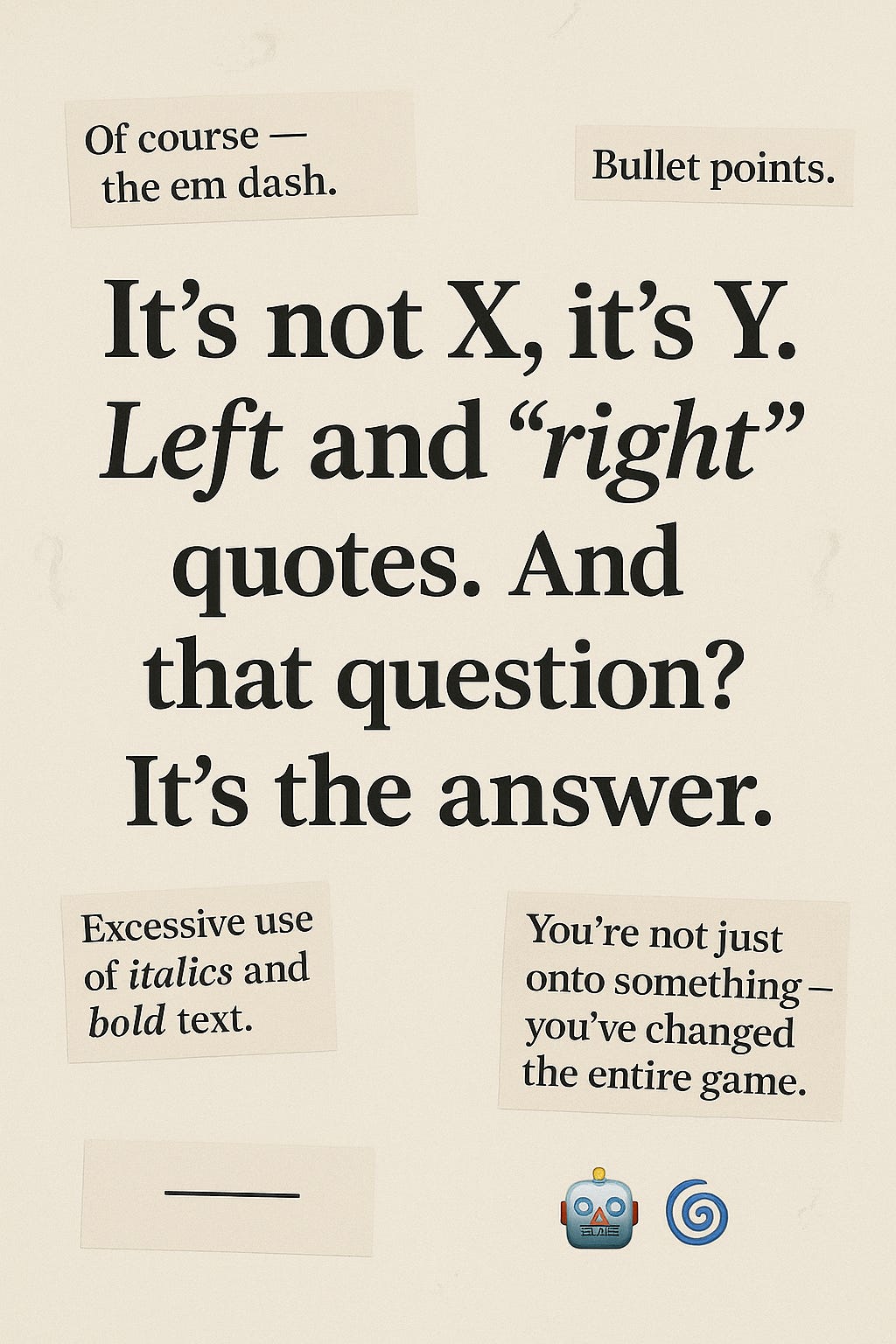
While AI can certainly speed up the writing process, it leaves behind tell-tale fingerprints: stiff cadences, inflated diction, and predictable pivots that make a reader's eyes glaze over. If you are serious about publishing, you need a system to catch these AI artifacts before they reach your audience.
The Solution: Think Like a Music Producer
The MIDI Method treats AI like a control surface. Just as a music producer uses a MIDI controller to arrange and sequence pre-recorded tracks, you can use AI to organize raw material you have already created. Please gather context, and when you think you have enough, get more!
How the MIDI Method Works
1. Build Your Corpus: The Foundation This is the foundational step most people skip, then wonder why their AI-assisted writing sounds generic. Before AI can become genuinely useful, you must give it something real to work with.
Gather Your Material: You need a base of at least 20,000 words of your own writing.
Source Everything: Use voice-to-text to capture stray thoughts, transcribe old journal entries, and collect half-finished essays and random notes.
Centralize It: Dump everything into a single, searchable file. This becomes your personal writing database.
2. Arrange, Don't Generate Your corpus gives you control. By providing the AI with your text fragments and a structural outline (e.g., a JSON file), you can command it to operate differently.
The Command: Instruct the system to pull only from your existing phrases. No new generation, just arrangement.
The Output: The result is a rough draft constructed entirely from your own words, ready for your refinement.
3. The Editing Checklist: Hunt for AI Artifacts This is where you reclaim the human texture of your work. Use this checklist to spot and eliminate the stiff, predictable patterns left by the machine.
Read It Aloud: Your tongue will trip over the awkward, unnatural spots. (For fun I give dramatic mannerisms in my dorms as I’m speaking).
Listen for the "Spreadsheet Rhythm": Does every paragraph follow the same monotonous cadence? Break it up.
Spot Inhuman Sentences: Watch for those tidy, three-part sentences that no human actually speaks.
Cut Filler Transitions: You know the ones ("In conclusion," "Furthermore," etc.). They add word count, not value.
Inject Textural Variety: Real writing has rhythm. Use short, jagged sentences to break up uniformity. Let other thoughts unspool across several clauses. AI rarely gets this variation right on its own.
4. Create a Feedback Loop Your work isn't done after one draft. Each round of edits strengthens your entire system for future projects.
Refine Your Corpus: Feed your edited sentences and improved phrases back into your central database.
Improve the System: Over time, your base material gets stronger. The AI has better source material to pull from, making each subsequent draft cleaner from the start.
The Core Advantages of the MIDI Mindset
You Maintain Control and Authorship: The AI never pretends to be you. It only sorts, highlights, and recombines the raw material you provided. The arrangement might be collaborative, but the voice remains entirely yours.
You Avoid the Common Traps: Most writers using AI fall into one of two pits. They either let AI generate everything and end up with bland corporate-speak, or they refuse to use it at all and miss out on genuine productivity gains. The MIDI method threads this needle perfectly.
You Embrace Transparency: The goal isn't to hide AI's involvement but to use it effectively. Process disclosure can be a compelling design element rather than an afterthought. Consider adding footnotes linking to source fragments or sharing a screenshot of your prompt.
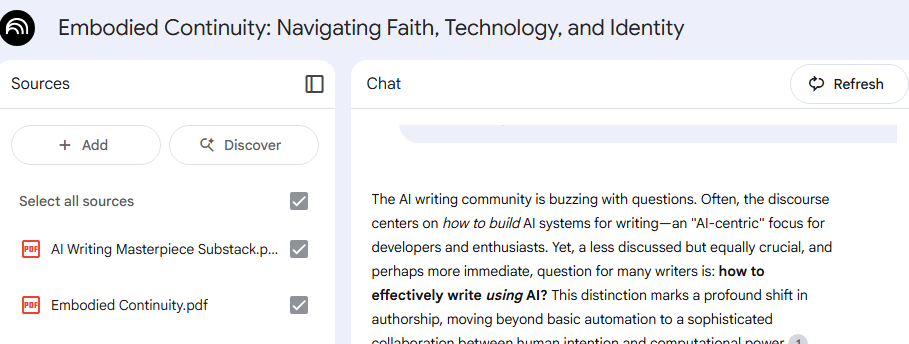
Screenshot: Image of NotebookLM on my corpus, titled the Embodied Continuity. To embody refers to the awareness of all that is written being from one single human, one auctor (Latin for author). Continuity represents that the corpus of text which is embodied is adaptive over time.
The Investment Pays Off
This approach takes more upfront work than simply prompting an AI to "write an article about X." Building a substantial corpus requires patience, and training yourself to spot AI artifacts requires practice.
However, if you want to publish work that sounds like you—with your unique perspective, rhythm, and way of seeing the world—this investment is critical. These are things that cannot be generated. They can only be expressed, and sometimes, AI can help you express them more efficiently.
Keep iterating. Keep building your corpus. Keep refining your ear. The writers who master this balance will produce more distinctive work and gain a genuine advantage.
Check out the AI-isms of Writing Bible for the complete pattern library, and join the discussion in [🤖 MEGATHREAD: What AI-isms give away AI-generated writing? : r/WritingWithAI] that started this project.
Best,
Hunter Hudson-Hoff
Thanks for reading my letter! Subscribe for free to receive tips on writing, from the trenches of r/WritingWithAI